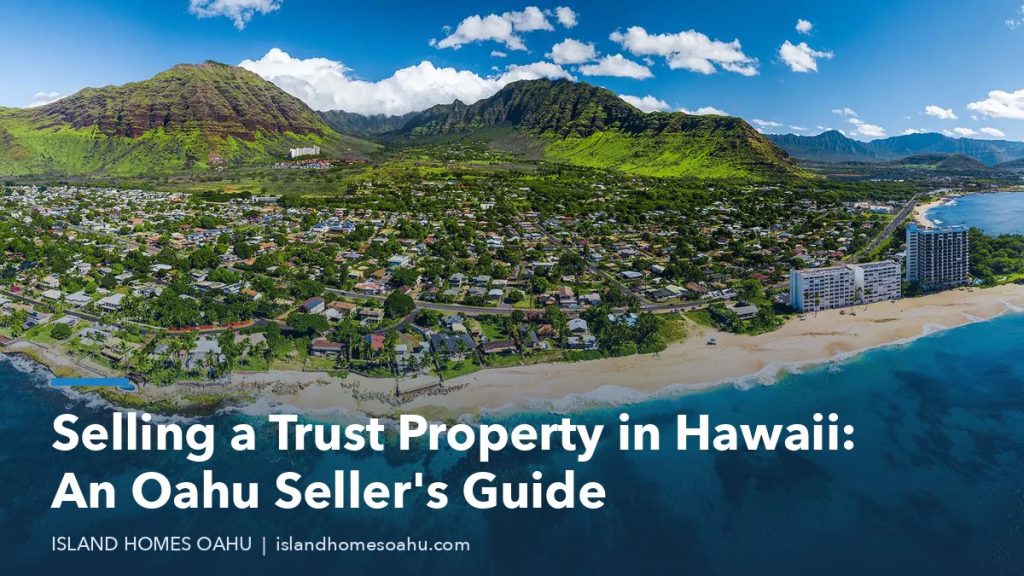
Selling a trust property in Hawaii starts with one question: who has the legal authority to sign? If the home is titled in a living trust, that is usually the trustee or successor trustee; if it sits outside the trust in the name of someone who has passed, a personal representative appointed through probate signs instead.
Here is the whole process, from authority to closing paperwork, so trustees and heirs know what to expect. For the general selling steps, start with my complete guide to selling a house on Oahu.
Quick answer
If an Oahu home is titled in a trust, the acting trustee generally signs and must act loyally, impartially and prudently under HRS Chapter 554D. A home outside the trust usually needs a personal representative appointed under HRS Chapter 560. Title and escrow will want proof of authority, and nonresident or foreign sellers may face HARPTA or FIRPTA withholding. This is general information, not legal or tax advice: confirm your situation with a Hawaii estate attorney and a CPA.
In this guide:
- Who can sign
- Trustee duties under HRS 554D
- Probate basics
- Certification of trust and proof of authority
- Seller disclosure
- HARPTA and FIRPTA
- Stepped up basis
- Getting heirs aligned
- Preparing a high end home
- Private sale or MLS
- FAQ
Who Can Sign When Selling a Trust Property in Hawaii?
It depends on how the home is titled today, not on what anyone intended. I ask the title company to confirm the current vesting first, because a trust can be signed without the deed ever being transferred into it.
When the home is in a trust
While the person who created a revocable trust (the settlor) is alive, Hawaii law says the trustee’s duties are owed only to that settlor (HRS 554D-603). After that, the successor trustee named in the trust acts under its terms. Hawaii law gives a trustee the power to sell trust property for cash or on credit, at a public or private sale (HRS 554D-816), unless the trust itself says otherwise.
If there are cotrustees who cannot reach a unanimous decision after consulting each other, the statute lets them act by majority decision (HRS 554D-703). The trust document can change that.
When the home is outside the trust
A home left in the name of someone who died generally has to go through the estate. Under HRS 560:3-103, a person must be appointed by the court or the registrar, qualify, and be issued letters to get the powers of a personal representative. Once appointed, a personal representative has the same power over title to estate property that an absolute owner would have, held in trust for creditors and others interested in the estate (HRS 560:3-711), and may sell land at a public or private sale (HRS 560:3-715), subject to the will and any court order.
Co-representatives are different: unless the will says otherwise, HRS 560:3-717 generally requires all of them to agree.
What Hawaii’s Uniform Trust Code Asks of a Trustee
Hawaii adopted the Uniform Trust Code as HRS Chapter 554D. The statute sets the standard for a trustee who sells:
- Good faith. Administer the trust under its terms and in the beneficiaries’ interests (554D-801).
- Loyalty. Act solely in the interests of the beneficiaries. A sale to the trustee personally, or to the trustee’s spouse, relatives, agent or attorney, is presumed to involve a conflict and can be voidable by an affected beneficiary unless an exception applies, such as authorization in the trust, court approval or beneficiary consent (554D-802).
- Impartiality. With two or more beneficiaries, act impartially, giving due regard to their respective interests (554D-803).
- Prudence. Use reasonable care, skill and caution, as a prudent person would (554D-804).
- Keeping beneficiaries informed. After the settlor’s death, keep qualified beneficiaries reasonably informed. The statute also sets 60 day notice deadlines after a trustee accepts the role and after a trust becomes irrevocable (554D-813).
In practice, a trustee should be able to show how the price was chosen and why an offer was accepted. I give trustees a written pricing analysis and a record of every offer. Whether to add an appraisal is a question for your attorney and CPA.
Hawaii Probate Basics if the Home Is Not in the Trust
Probate in Hawaii runs under the Uniform Probate Code, HRS Chapter 560, and the Hawaii Probate Rules set the court procedures in the circuit courts. The personal representative is a fiduciary held to trustee standards of care (HRS 560:3-703).
The Probate Rules have a section on selling real property:
- Rule 66: the personal representative must ask the court for authorization to offer the property for sale if the will requires it or a devisee or heir demands it.
- Rule 67: if all heirs or beneficiaries consent in writing to a specific price, the home can be listed and sold at that price without the court confirmation steps.
- Without that consent, Rule 68 says the contract must state the sale may be subject to court confirmation and overbids, and that the property is conveyed “as is” by quitclaim or limited warranty deed.
The commentary to Rule 67 notes that court confirmation and overbids may lower the price, so I like to know early whether the heirs can agree. Your probate attorney decides which path applies.
Handling a trust or estate home and want a plan before you list? Request a private consultation, or call or text me at (808) 459-6450.
Certification of Trust and Proof of Authority for Title and Escrow
Title and escrow need proof the signer can sell. Hawaii law lets the trustee provide a certification of trust instead of the full trust document (HRS 554D-1013). It states the trust’s name and date, the settlor, the acting trustee, the trustee’s powers, whether it is revocable and how cotrustees sign, and that it has not been changed in a way that makes those statements wrong. It does not have to show who inherits.
The recipient may also ask for trust excerpts naming the trustee and granting the power to sell. For an estate, the usual proof is the personal representative’s letters. Each title company sets its own list, so I ask for it before we list.
Does a Trust or Estate Sale Need a Seller Disclosure?
Hawaii’s seller disclosure law has a list of exempt sales in HRS 508D-3. It includes a “sale by devise, descent, or court order” and sales by operation of law. A sale by a trustee is not named in that list. Whether a particular trust or estate sale is exempt is a legal question, so ask your attorney before you decide not to disclose.
Either way, gather what you know: past repairs, reports, permits and what any caretaker has seen.
HARPTA and FIRPTA When Heirs or Beneficiaries Live Off Island
Hawaii’s withholding rule, known as HARPTA, generally requires the buyer to withhold a percentage of the amount realized when buying Hawaii real property from a nonresident person and send it to the Department of Taxation with Form N-288. The current rate is stated in the Form N-288 instructions.
Those instructions count a “resident trust” or “resident estate” under HRS 235-1 as a resident person. A seller who qualifies for an exception, for example by being a resident person, can give the buyer Form N-289, which for a trust or estate is signed by the trustee, executor or equivalent fiduciary. Form N-288B lets a nonresident seller apply to waive or adjust the amount. The seller files a Hawaii return to get credit for the withholding.
If the seller is a foreign person, federal FIRPTA withholding can also apply, reported on Forms 8288 and 8288-A. The IRS points to IRC section 1445 and its regulations for the rules on trusts and estates. I cover the off island side in more detail in selling Oahu property when you live out of state. Your CPA should decide which forms apply.
Stepped Up Basis in Plain English
Basis is your tax cost in the property. According to IRS Publication 551, the basis of property inherited from a decedent is generally its fair market value on the date of death, or on the alternate valuation date if the personal representative chooses that method. That is what people mean by a “stepped up” basis.
Whether a home held in a trust gets that treatment depends on the type of trust and how it was set up, so this is a conversation for your CPA. Ask early whether you need a date of death valuation.
Getting Heirs and Beneficiaries on the Same Page
Sales go smoother when everyone hears the same information at the same time:
- One point of contact: the trustee or personal representative.
- A shared timeline: cleanout, repairs, photos, list date and expected escrow length.
- The same pricing analysis for everyone, so nobody feels a number was chosen behind closed doors.
- Early answers on who wants items from the home.
When someone disagrees, whether a beneficiary objecting to a sale, a co-owner outside the trust or an heir demanding court confirmation, each raises different legal questions. The Hawaii Probate Rules allow the probate court to refer contested probate and trust matters to mediation. Co-owners who cannot agree may end up in a court partition. These are attorney decisions, and I recommend involving yours before positions harden.
Preparing a High End Trust or Estate Home for Sale
Homes coming out of a trust have often been owned for decades, so paperwork matters as much as paint. Before we go live, I gather:
- Permits and records. Additions, pools, guest quarters and renovations should match what the Honolulu Department of Planning and Permitting has on file.
- Surveys, title and tenure. Boundaries, easements, private road agreements and whether the land is fee simple or leasehold. If the lot is leasehold, read my guide to leasehold vs fee simple on Oahu.
- Shoreline questions. For oceanfront lots, buyers may ask whether the shoreline has been certified and whether walls or other shoreline structures were permitted. The Department of Land and Natural Resources handles shoreline certifications, based on a licensed surveyor’s recent field survey and a public notice period, so start early if one is needed.
- Condition and access. Insurance for a home that may sit empty, utilities on for inspections, and a plan for keys and showings.
Each luxury area has its own rules and land features. My guide to luxury homes on Oahu covers what buyers look at, and my Kahala page covers that area specifically.
Selling Privately or on the MLS
Some trustees want discretion: no open houses and no photos of a parent’s belongings online. Others want the widest exposure, which can support the duty to act prudently. The trust may tilt the answer.
If you are considering marketing before the home is public, know that MLS rules govern pre-public and off market marketing for listings. I will explain how the current rules apply before we decide, with your attorney comfortable that the approach fits the trust.
FAQ: Selling a Trust or Estate Home on Oahu
Who signs the listing agreement for a home in a trust?
Generally the acting or successor trustee. Cotrustees who cannot agree may act by majority under HRS 554D-703 unless the trust says otherwise.
Does a home in a living trust have to go through probate?
Generally not if it is titled in the trust. A home still in the name of a person who died usually needs a personal representative under HRS Chapter 560.
What is a certification of trust?
A document under HRS 554D-1013 confirming the trust, the trustee and the trustee’s powers, without revealing who inherits.
Is a trust sale exempt from Hawaii seller disclosure?
HRS 508D-3 exempts sales by devise, descent or court order, but a sale by a trustee is not named in that list. Ask a Hawaii real estate attorney about your sale.
Will HARPTA apply if the beneficiaries live on the mainland?
It depends on whether the seller is a resident person, which can include a resident trust or estate. Ask your CPA.
Selling a Trust Property in Hawaii: The Bottom Line
Confirm title and who can sign. A trustee sells under HRS 554D, a personal representative under HRS 560 and the Probate Rules, and both need proof of authority. Line up your attorney and CPA on disclosure, withholding and basis before you list. This explains how the rules work; it is not legal or tax advice.
Sources
- HRS Chapter 554D, Uniform Trust Code
- HRS 554D-603, Settlor’s powers
- HRS 554D-703, Cotrustees
- HRS 554D-801, Duty to administer trust
- HRS 554D-802, Duty of loyalty
- HRS 554D-803, Impartiality
- HRS 554D-804, Prudent administration
- HRS 554D-813, Duty to inform and report
- HRS 554D-816, Specific powers of trustee
- HRS 554D-1013, Certification of trust
- HRS Chapter 560, Uniform Probate Code
- HRS 560:3-103, Necessity of appointment
- HRS 560:3-703, General duties of personal representatives
- HRS 560:3-711, Powers of personal representatives
- HRS 560:3-715, Transactions authorized
- HRS 560:3-717, Co-representatives
- Hawaii State Judiciary: Hawaii Probate Rules
- HRS 508D-3, Seller disclosure exemptions
- Hawaii Department of Taxation: HARPTA forms
- Hawaii Department of Taxation: Form N-288 and instructions
- IRS: FIRPTA Withholding
- IRS Publication 551, Basis of Assets
- DLNR Land Division: Shoreline Certifications
- Honolulu Department of Planning and Permitting
Selling a home held in a trust or estate? I will map out authority, paperwork and timing with you and your attorney before anything goes public. Request a private consultation, or call or text me at (808) 459-6450. I am Devin Hammack with Team Taparra at eXp Realty.
Get a real value range built from closed sales near you, with the comps attached. No listing appointment, no pressure.
Get My Home Valueor call or text (808) 459-6450