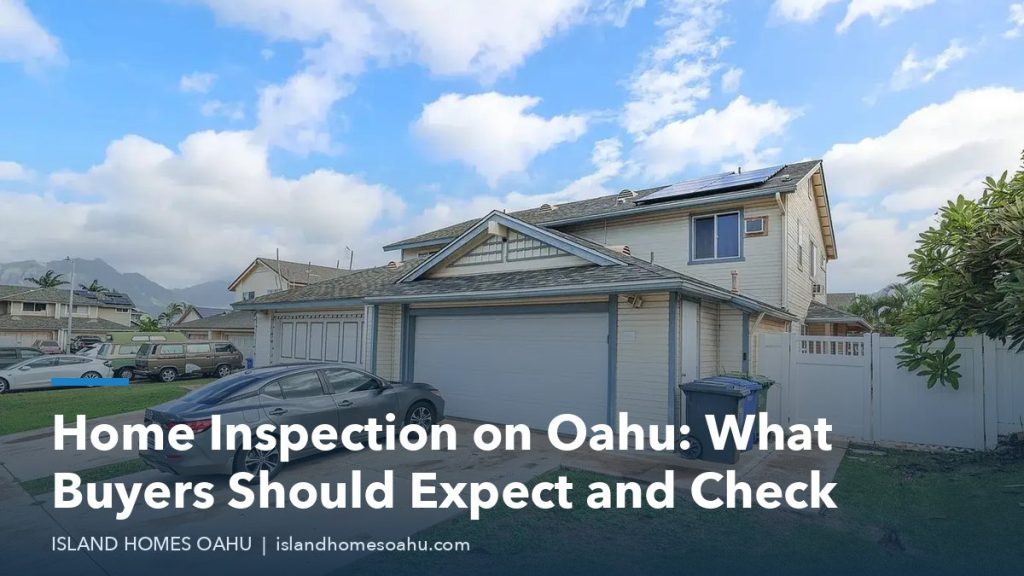
A home inspection on Oahu is where you find out what you are really buying: the roof, the plumbing, the wiring, the rust the listing photos did not show, and whether the house still runs on a cesspool. It happens during your inspection period after your offer is accepted, and what you find there decides whether you ask for repairs, ask for a credit, or walk away.
Here is what to expect, what to check on island homes, and the official pages to read before your deadline.
Quick answer
You hire your own home inspector, because the lender’s appraisal is not an inspection. On Oahu you also get a separate termite inspection, and your purchase contract says who orders it and who pays. Look hard at salt air rust, the roof, old plumbing and the electrical panel. Ask whether the home is on a cesspool, since Hawaii law says every cesspool must be upgraded, converted or connected to sewer before January 1, 2050. Check permits with Honolulu DPP, sort out who owns any solar, and send your repair request before your inspection deadline in the contract.
In this guide:
- What a home inspection on Oahu covers
- The termite inspection is separate
- Salt air, roofs, plumbing and electrical
- Cesspools and the 2050 deadline
- Unpermitted work and Honolulu DPP permits
- Solar panels: owned or leased
- Condo vs house inspections
- Your inspection period and repair request
- Mistakes to avoid
- FAQ
- Bottom line
What a Home Inspection on Oahu Covers (and What It Does Not)
HUD’s own buyer notice puts it plainly: a home inspection only happens if you arrange one, and the appraisal your lender orders is not a home inspection. The appraisal estimates value for the lender. The inspection is for you. Read HUD’s notice, For Your Protection: Get a Home Inspection.
A general inspector looks at what can be seen and reached safely, including:
- The roof surface, gutters, flashing and any signs of past leaks inside
- The structure: foundation, posts and piers on raised homes, framing you can see, and the slab
- Plumbing: supply lines, drains, water heater, fixtures and visible leaks
- Electrical: the main panel, breakers, outlets, grounding and any amateur wiring
- Windows, doors, railings and stairs
- Air conditioning and appliances that stay with the home
It usually does not cover what is inside walls, underground lines, termites, mold lab testing, or anything the inspector cannot reach. HUD suggests asking an inspector for their Standards of Practice or a sample report before you hire them. A sample report shows how they write up problems, which matters when you write a repair request.
Plan to be there for the last hour. The inspector can show you which findings are urgent and which are normal wear.
The Termite Inspection Is Separate
On Oahu the termite inspection is its own report, done by a licensed pest control company, not by your home inspector. The standard Hawaii purchase contract most agents here use has its own section for it. That section covers who picks the termite company, who pays for the inspection, and what happens if the report shows live activity or damage.
In my deals the buyer side usually chooses the company and the contract lays out the rest, but every contract is negotiated, so read your own. If the report shows active termites, the contract language decides who orders and pays for treatment and by when. If you are not sure what yours says, ask your agent or a real estate attorney before your deadline. This article is not legal advice.
Some loans also care about termites. A VA loan, for example, can require a termite report before closing, and your lender will tell you exactly what your loan needs. I cover that in my VA loan guide for buying on Oahu.
Salt Air, Roofs, Plumbing and Electrical in Older Island Homes
Many homes I show were built decades ago, and island weather is hard on materials. Watch these items.
Salt air and rust
Salt air works on metal, especially near the ocean. Look at railings, window frames, visible hurricane straps, exterior electrical boxes, AC condensers and the water heater. Rust through a part or on structural connectors is a repair item.
Roofs
Ask the seller for the roof’s age and any permits or warranty paperwork. Have the inspector look for soft spots, lifted shingles, rusted metal roofing and ceiling stains. If the inspector flags the roof, a roofer’s written estimate during your inspection period gives you something real to negotiate with.
Plumbing
Older homes can still have original galvanized supply lines or cast iron drains. Look under every sink and run the water a while. A sewer or drain camera scope from a plumber is worth considering on an older house, because the general inspector cannot see underground.
Electrical
Older panels are a common write up: outdated or double tapped breakers, missing covers, or additions wired without a permit. If the inspector recommends an electrician, get that electrician out before your deadline, not after.
Cesspools on Oahu and Hawaii’s 2050 Deadline
This one surprises mainland buyers most. In 2017 the Legislature passed Act 125. It is now Hawaii Revised Statutes section 342D-72, which says that before January 1, 2050, every cesspool in the state must be upgraded or converted to a wastewater system the Director of Health approves, or connected to a sewer system. The director can grant exemptions to owners who apply and show a legitimate reason it is not feasible, such as a small lot, steep land, poor soils or access problems.
The Department of Health cesspools page estimates about 88,000 cesspools statewide, with over 11,000 on Oahu. The Department also sorts cesspools into priority categories by risk to water, so ask which one applies.
What I have buyers ask on any home that is not clearly on city sewer:
- Is the home on a cesspool, a septic system, an aerobic unit, or sewer? Get it in writing on the disclosure.
- Where is the system on the lot, and when was it last pumped or serviced?
- Has the seller looked into conversion or applied for an exemption?
- Can a wastewater professional inspect and locate it during your inspection period?
After closing, conversion is your problem, so plan and negotiate for it now. Get real estimates from licensed contractors rather than guessing.
Not sure how a cesspool or an older house changes your plan? Get your Buyer Game Plan, or call or text me at (808) 459-6450.
Unpermitted Work and How to Check Permits With Honolulu DPP
Enclosed carports, garage conversions and added bathrooms are common on Oahu, and not all were permitted. Unpermitted work can mean safety problems, insurance trouble, and a bill to legalize it later.
The City and County of Honolulu Department of Planning and Permitting has a Permitting page with its search tools. Open building permits and records from August 2025 forward are in the HNL Build portal. Closed building permits through July 31, 2025 are in the older DPP Online Services search, which is linked from the same page. For full permit files, DPP’s Resources page says to fill out a Request to View Records or contact its Data Access Imaging Branch at (808) 768-8277.
How I use it: compare the permit history to what is actually on the ground. If the listing and the permits tell different stories, ask the seller in writing and have your inspector look closely at that area. If work was done recently, ask for the contractor’s name and check the license through the state’s Professional and Vocational Licensing Division.
Solar Panels: Owned, Leased, and the Utility Agreement
Rooftop solar is common on Oahu, and the questions are mostly paperwork. Hawaiian Electric says that when you buy a home with rooftop solar, you assume the rights and responsibilities of the previous owner’s existing agreement with the utility. If a solar lease changed hands, it may ask for documentation.
- Is the system owned outright, financed, or leased? A lease or loan has its own transfer steps and terms to read.
- Ask for the utility agreement and installer warranty.
- Check that the system shows up in the DPP permit history.
- Ask the inspector to check for leaks around roof penetrations, and find out the age of the roof under the panels.
Condo vs House Inspections on Oahu
With a house, the inspection covers the whole property. With a condo, your inspector looks at the unit: fixtures, wiring, windows, the lanai and appliances. The roof, structure and common pipes usually belong to the association.
That makes the association documents part of your inspection for a condo. Under HRS section 514B-154.5, records such as the declaration, bylaws, house rules, financial statements and board minutes must be made available to owners and their authorized agents. Read the minutes for words like spalling, plumbing and special assessment. I go through this in detail in my checklist for buying your first condo in Honolulu, and the state’s condominium resources page is a good place to start.
Also check whether the land is fee simple or leasehold. If you see leasehold, read my explainer on leasehold vs fee simple on Oahu before you spend money on inspections.
Your Inspection Period and the Repair Request
Your purchase contract sets the inspection deadline, usually counted in days from acceptance, and missing it can mean accepting the property as is. Schedule the inspector, termite company and any specialists the day your offer is accepted.
In most resales the seller’s disclosure statement runs on its own clock. Under HRS section 508D-5, the seller provides the disclosure within ten calendar days of acceptance, and you then have fifteen calendar days after you receive it to review it and decide whether to rescind in writing. The parties can agree in writing to shorten or extend those times, so confirm what your contract says.
If the home was built before 1978, federal rules from the EPA on lead disclosure give buyers a 10 day opportunity to test for lead based paint, which the buyer and seller can change or waive in writing.
Once your reports are in, you have four basic choices:
- Accept the property as it is.
- Ask for specific repairs by licensed contractors, with receipts.
- Ask for a credit or lower price instead.
- Cancel within the terms of your contract.
Focus the request on safety, systems and big ticket items, with report pages and estimates attached. A credit can be easier than repairs, and it can reduce your cash at closing; here is how closing costs for buyers on Oahu and credits work. Confirm wording and deadlines with your agent or a real estate attorney. If you are new to the whole process, my first time home buyer guide for Oahu shows where inspections fit from offer to keys.
Mistakes to Avoid
- Skipping the inspection because the home is newer.
- Leaving no time for specialists.
- Treating the termite report and the home inspection as the same thing.
- Not asking about the cesspool until after closing.
- Asking for dozens of cosmetic fixes and burying the items that matter.
- Missing the deadline for a written response.
Home Inspection on Oahu FAQ
Do I need a home inspection on Oahu if the lender orders an appraisal?
Yes. HUD’s buyer notice says an appraisal is not a home inspection. The appraisal estimates value for the lender, and the inspection tells you about the home’s condition.
Who pays for the termite inspection in Hawaii?
It depends on your purchase contract. The standard Hawaii contract has a separate termite section that sets who picks the company, who pays and who treats live activity.
Can I buy a home on Oahu that has a cesspool?
Yes, but Hawaii law requires every cesspool to be upgraded, converted or connected to sewer before January 1, 2050, unless the Department of Health grants an exemption. Plan and price that work during your inspection period.
How do I check permits on an Oahu home?
Use the Honolulu DPP Permitting page. Newer records are in the HNL Build portal, and closed building permits through July 31, 2025 are in the older DPP Online search.
Is a condo inspection different from a house inspection?
Yes. A condo inspector looks at your unit, while the roof, structure and common systems are usually the association’s, so read the association documents too.
What happens if the inspection finds problems?
You can accept the home as is, ask for repairs, ask for a credit or price change, or cancel within the terms of your contract. Send your response in writing before your inspection deadline.
The Bottom Line on a Home Inspection on Oahu
Hire your own inspector, get the separate termite report, and spend extra attention on rust, the roof, old plumbing and the panel. Ask about the cesspool and the 2050 deadline, check the permits with DPP, and sort out the solar paperwork. Then send a focused written request before your deadline.
Sources
- HUD: For Your Protection: Get a Home Inspection (HUD 92564 CN)
- Hawaii Revised Statutes 342D-72: Cesspools; mandatory upgrade, conversion, or connection
- Hawaii Department of Health, Wastewater Branch: Cesspools in Hawaii
- Hawaii Revised Statutes 508D-5: Delivery of disclosure statement to buyer
- Hawaii Revised Statutes 514B-154.5: Association documents to be provided
- City and County of Honolulu DPP: Permitting
- City and County of Honolulu DPP: Resources
- Hawaiian Electric: Change of Ownership for rooftop solar customers
- US EPA: Real Estate Disclosures about Potential Lead Hazards
- Hawaii DCCA Real Estate Branch: Resources for Condominium Owners and Prospective Buyers
- Hawaii DCCA: Professional and Vocational Licensing Division
Want help planning inspections on a home you like? Get your Buyer Game Plan, or call or text me at (808) 459-6450. I am Devin Hammack with Team Taparra at eXp Realty.
Get the free 11 step first time buyer plan by email: what you can really afford, condo vs house, and help with closing costs.
Send Me the Planor call or text (808) 459-6450